Planning Inventory for Seasonal Demand Spikes in Your Equipment Rental Business
Most operators don't need more gear. They need a better plan for the gear they already have.
If you rent out party equipment, tools, cameras, or outdoor gear, you already know the pattern. A few months of the year, you're turning people away. The rest of the time, your warehouse is full and your phone is quiet. Seasonal rental business planning is the difference between surviving that cycle and actually making money from it. But the first instinct most operators have when they're fully booked in June is to buy more stuff. That's usually the wrong place to start.
Buying more gear is usually the wrong first move
When every weekend in July is fully booked and you're saying no to three or four inquiries a day, buying more tables or another set of tents feels obvious. But equipment costs money to buy, store, maintain, and insure year-round. If you add 20 chairs to cover a six-week spike, those chairs sit in your garage for the other 46 weeks. The math only works if the extra revenue from that spike covers the full annual cost of owning the gear, not just the purchase price.
Before you spend anything, figure out whether you're actually short on inventory or just short on time.
It might be a turnaround problem, not a capacity problem
A lot of "sold out" situations aren't really about not having enough items. They're about not getting items back, cleaned, inspected, and marked ready fast enough for the next booking. If your 10 folding tables go out on Friday and come back Sunday evening, they're technically unavailable until you've wiped them down, checked for damage, and logged them as ready again. If that takes until Tuesday, you just lost Monday and Tuesday availability for those tables, even though they were physically sitting in your warehouse.
The same thing happens with delivery scheduling. If you're doing all pickups and drop-offs yourself, a busy Saturday morning means gear that could be rented isn't getting to customers on time, and returns aren't being collected until the next day.
Look at your busiest weeks from last season. Count how many bookings you turned away, and then check whether the items were actually out with customers on those dates or just stuck in the "returned but not ready" gap. If half your lost bookings come down to turnaround time, speeding up your cleaning and prep process will free up more capacity than buying a single extra item.
Use last season's numbers for this season's plan
Seasonal rental business planning doesn't require a forecasting model or a complicated spreadsheet. It does require you to look at what actually happened last year instead of going from memory.
Pull up your bookings from last season. You're looking for a few specific things:
- Which items hit full capacity first, and on which dates? If your arch backdrop was booked every Saturday in May and June but your linens still had availability, the arch is your constraint, not your whole inventory.
- Which dates did you turn people away? Not "it felt busy," but actual inquiries you couldn't fill. If you didn't track those, start this season. Even a note in your phone with the date and what they wanted is enough.
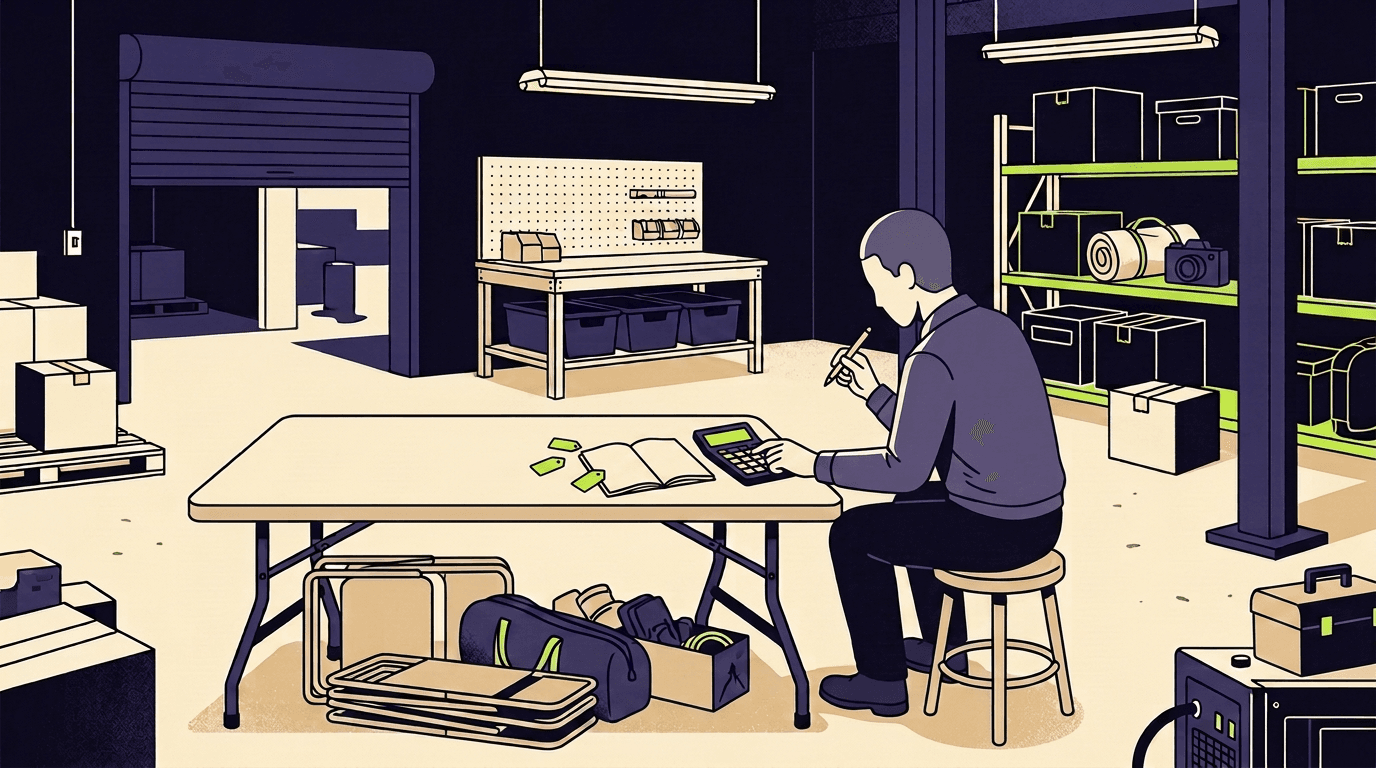
- How many days did items sit between bookings because of cleaning, repairs, or logistics? That gap is invisible lost revenue.
Most operators find that 80% of their "sold out" pressure comes from three or four specific items during maybe 10 to 15 peak dates. That's a much more specific problem than "I need more of everything."
When borrowing from another operator beats buying
Once you know exactly which items run short and exactly which dates are the problem, you've got a more interesting option than buying: borrowing or subcontracting from another operator.
Most cities have more than one party equipment supplier, tool hire company, or camera gear outfit. Many of them face the same seasonal pattern you do, but their peak items might be different. A wedding decor operator whose arches and backdrops sell out in June might know a furniture hire company with extra arch frames sitting idle that same month.
The arrangement is usually simple. You rent or borrow the extra items at a wholesale rate for the dates you need them, handle the customer yourself, and return them after. Some operators do this on a handshake. Others write up a short agreement covering condition, liability, and timing.
This works especially well for items that are expensive to buy but only needed during a narrow peak. If you need five extra pop-up tents for four weekends in July, buying them means storing them through winter. Borrowing them means spending less upfront and having zero off-season overhead.
The catch is that you need to plan ahead. If you wait until June to ask around, everyone else is already booked too. Make those calls in March or April, while everyone's still in their slow season and happy to talk.
Plan the slow months alongside the busy ones
Seasonal planning that only focuses on the peak is half a plan. The other half is figuring out what happens to your inventory the rest of the year.
If you're thinking about buying new gear specifically for a summer spike, ask yourself what it does in October through March. Does it rent at all during those months, even at lower rates? Can you offer off-season pricing to corporate events, school functions, or smaller local gatherings that happen year-round? Or is it going to sit in your storage space collecting dust and costing you insurance?
Some operators offset slow months by renting out items to other operators, essentially becoming the supplier side of the borrowing arrangement described above. If your competitor is running lean and you've got surplus stock, a wholesale sublet can cover your storage and maintenance costs even when your own bookings are thin.
The point is to think in full years, not just in peaks. A piece of equipment that generates strong revenue for 8 weeks but costs you money for 44 weeks might still be a net loss.
A rough seasonal plan on one page
You don't need a spreadsheet with 47 tabs. A useful seasonal plan can fit on a single page and take less than an hour to build.
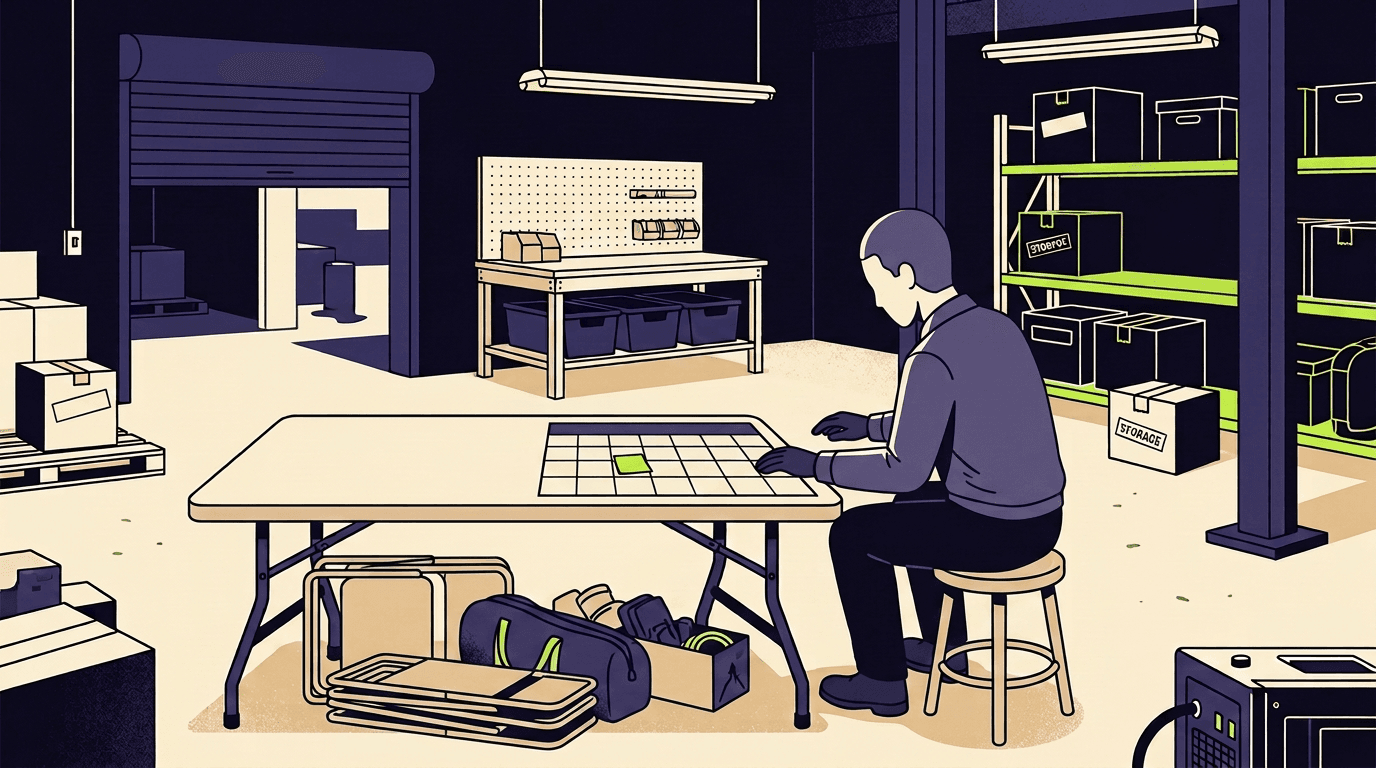
Start with a simple 12-month grid. For each month, note three things: your expected demand level (busy, normal, slow), the items most likely to hit capacity, and any dates you already know about from repeat customers or local events that always book early.
Next, mark the dates where you turned people away last year. Those are your real pressure points.
For each pressure point, decide on one of three responses: speed up turnaround so items are ready faster, borrow from another operator for that specific window, or buy more stock. Buying should be the last option on the list, only after you've ruled out the first two.
Finally, make a note of what your off-season plan is for any gear you do buy. If you can't write down a realistic plan for those items during the slow months, that's a strong signal you should be borrowing instead of buying.
Start with the numbers you already have
This kind of planning gets a lot easier when you can actually see your booking patterns across a full season instead of guessing from memory. If you're tracking orders in a tool like Kiryo, you can pull up which items hit capacity, which dates got the most pressure, and where your turnaround gaps were, so your seasonal plan is built on real numbers rather than gut feeling. But even without software, the habit matters more than the tool. Write down what you turned away this season, review it before the next one, and you'll already be ahead of most operators who just buy more chairs and hope for the best.