What to Do When a Customer Returns Damaged Equipment
A step-by-step damaged rental equipment policy for operators who rent out physical gear
If you rent out tables, tools, cameras, tents, bikes, or costumes, it is only a matter of time before something comes back in worse shape than it left. A scratched lens. A torn canopy. Chairs with wobbly legs that were solid last week. The question is not whether it will happen but whether you have a damaged rental equipment policy ready when it does. Most small operators put this off and figure they will deal with it case by case. That works until the third time you are staring at broken gear with no photos, no notes, and no record of what it looked like before it went out.
This is a practical guide to building a damage policy that holds up. Not a legal template. Just the steps you can follow every time equipment comes back with a problem.
Why "we'll figure it out later" stops working
When you are doing five or ten orders a month, you probably remember which customer had the photo booth and whether the scratch was already there. Once you are running 20 or 30 orders a month, that memory falls apart fast.
The moment a customer pushes back on a damage charge and you cannot prove the item was clean before pickup, you are stuck. You either eat the repair cost or start an argument with no evidence on your side. The worst version is when a repeat customer disputes it and you lose the relationship and the money. A simple policy does not need to be formal. It just needs to be consistent enough that you are never guessing.
Documenting condition before it goes out
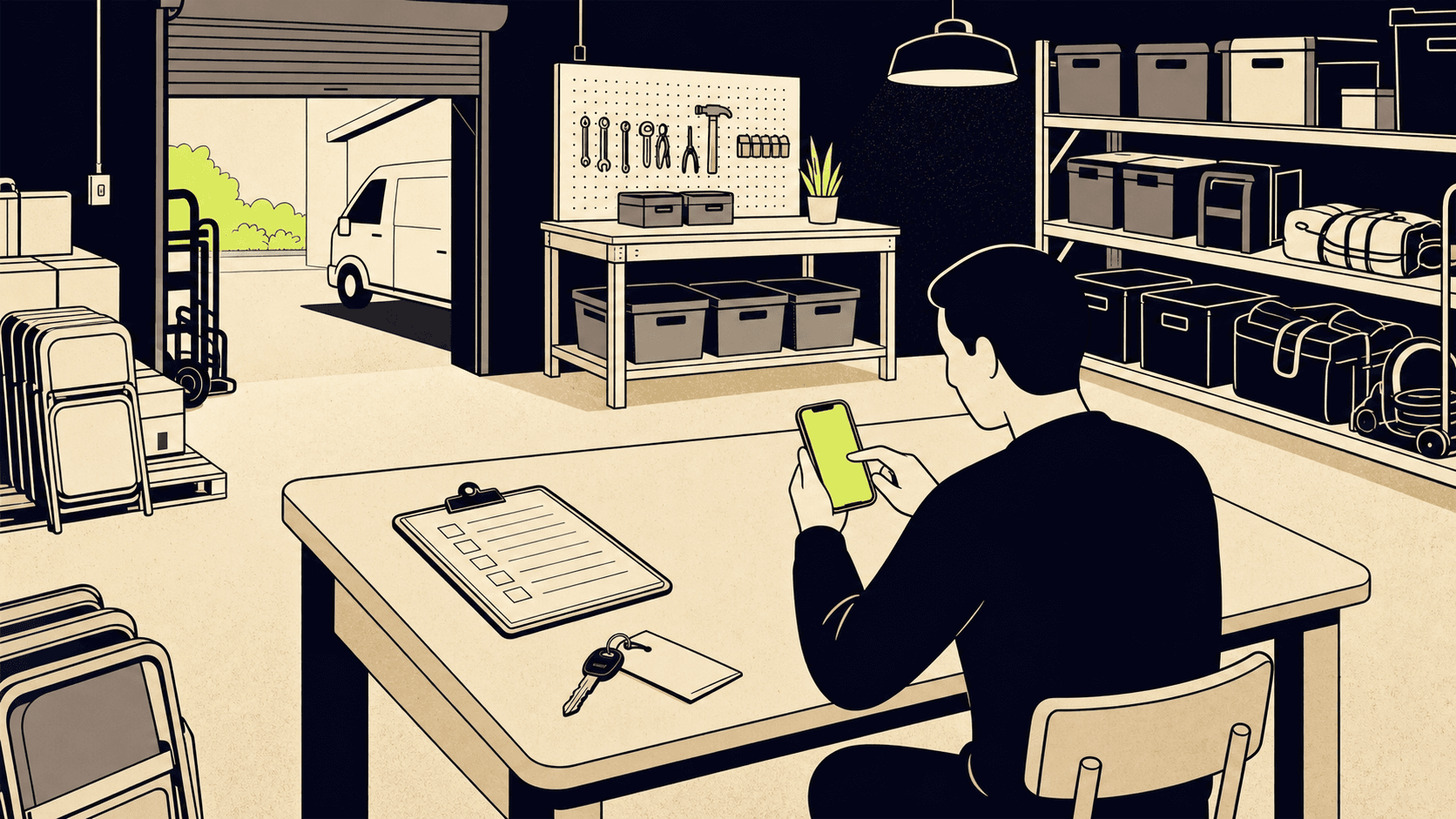
Record the condition of every piece of gear before it leaves your hands. Not twenty minutes of photography per chair. Just a quick baseline you can point to later.
- A few photos of the item ready to go out. Two or three shots showing overall condition. If something already has cosmetic wear, capture it so you are not confused later.
- A short note on anything already imperfect. "Small scratch on left leg" or "zipper pull slightly loose" is plenty. You are leaving a note for future you, not writing an inspection report.
- The date and which order it went out on. Without this, the photos are useless because you cannot tie them to a specific customer.
You do not need serial-number tracking on every fork or cable. If you rent out 200 identical folding chairs, track them by batch. Save detailed documentation for higher-value items like cameras, generators, or power tools where a single repair can cost hundreds.
Normal wear vs. real damage: drawing the line
This is where most operators get stuck. A tablecloth comes back with a light stain. A bounce house has scuffing on the base. A drill bit is slightly duller. Is that damage or just the cost of renting things out?
A useful rule of thumb: if the item can go straight out on the next order without extra money or time, that is wear. If you have to repair it, replace a part, deep clean beyond your usual turnaround, or take it out of rotation, that is damage.
- Wear: Light scuffing on table legs. Minor creasing on fabric. Dirt on a tent base that comes off with normal cleaning.
- Damage: A torn tent panel. A cracked surface. Missing parts. Stains that will not come out. Anything bent, broken, or functionally degraded.
Write this distinction into your rental agreement or terms page. Even one paragraph is enough. Customers are far less likely to argue if the line was stated upfront rather than invented after the fact.
Raising a damage charge without starting a fight
The conversation matters more than the policy. You can have the best terms in the world and still lose a customer if the way you bring it up feels accusatory. Three things that help:
- Lead with facts, not blame. Show the customer what you found. Photos help enormously. You are pointing out a difference between how the item left and how it came back, not accusing anyone.
- Be specific about the cost. "There's some damage" invites argument. "The canopy has a 15cm tear that costs about 40 euros to patch" is concrete and harder to dispute.
- Give them a moment before asking for money. Let them see the photos and the cost first. Pushing for payment in the same breath as showing the damage makes people defensive.
Here is roughly what that sounds like in practice:
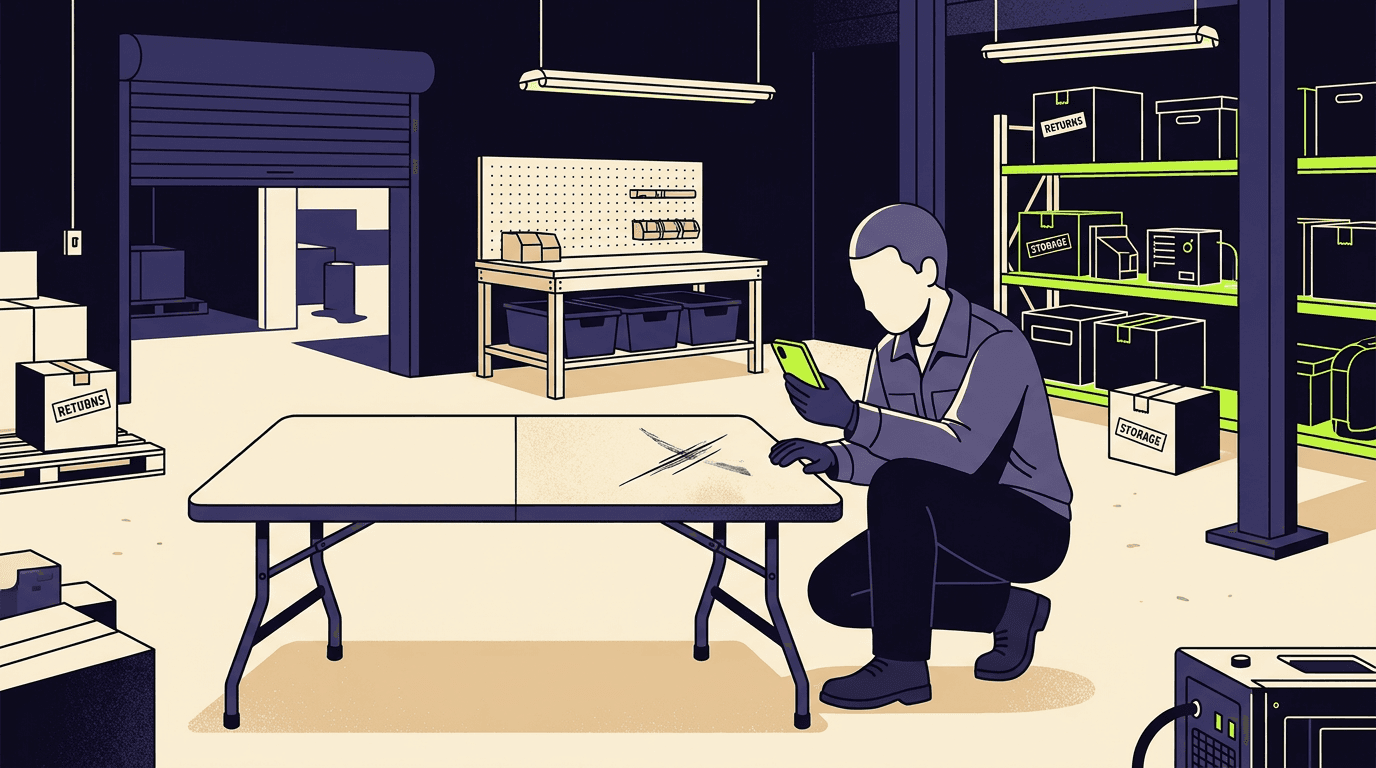
"Hi Maria, thanks for getting the tables back. When we checked them in, we noticed a deep scratch on one tabletop that was not there before pickup. I have photos from before and after so you can see the difference. The repair costs around 30 euros. We can deduct it from your deposit or I can send a separate invoice, whichever you prefer."
Calm, factual, no guilt trip. It gives the customer a choice about how to pay, which keeps them feeling in control.
Hold the deposit, bill separately, or split it?
Once you confirm real damage, you need to decide how to collect. The right call depends on how much the repair costs relative to the deposit and whether you want this customer back.
Deduct from the deposit. Simplest path when the damage cost is less than or equal to the deposit. Refund the difference with a short note explaining the deduction and the photos attached.
Bill separately. Use this when the damage exceeds the deposit or when there was no deposit. Send an invoice with a clear line item for the repair and normal payment terms.
Split the difference. Sometimes the damage is in a grey zone. The customer used the gear hard but not recklessly, the item was already aging, or the repair is minor. Absorbing half the cost and deducting half is a reasonable middle ground that signals fairness without letting the full cost fall on you.
Whatever you decide, tell the customer explicitly. "I'm deducting 25 euros from your 50 euro deposit for the torn panel and refunding the remaining 25" leaves no room for confusion.
Building a damaged rental equipment policy that sticks
The hardest part is not the policy itself. It is doing it every time. When you are loading a van at 6 a.m. for a Saturday delivery, condition photos feel like an extra step. But it is exactly the time you skip it that something comes back broken.
A few ways to make it stick:
- Build it into your pickup and return flow. Photos and notes happen during packing and check-in, not as a separate task you remember later.
- Keep damage records next to your orders. If condition notes live in your camera roll and deposits in a notebook, you will never connect them when it matters.
- Put your damage standard in your terms. One paragraph. Customers who know the rules upfront rarely argue about them.
You do not need a perfect system. You need a consistent one. A phone photo, a two-line note, and a clear damage threshold will prevent 90% of the disputes that cost you money and goodwill. If you want a way to track item condition alongside your orders and availability, Kiryo is built for that. But whatever tool you use, start recording condition at checkout and return. Future you will be glad you did.