Equipment Rental Agreement Template: What to Include (and Why Each Clause Matters)
A plain-language walkthrough of every clause a small equipment hire operator actually needs in a rental contract.
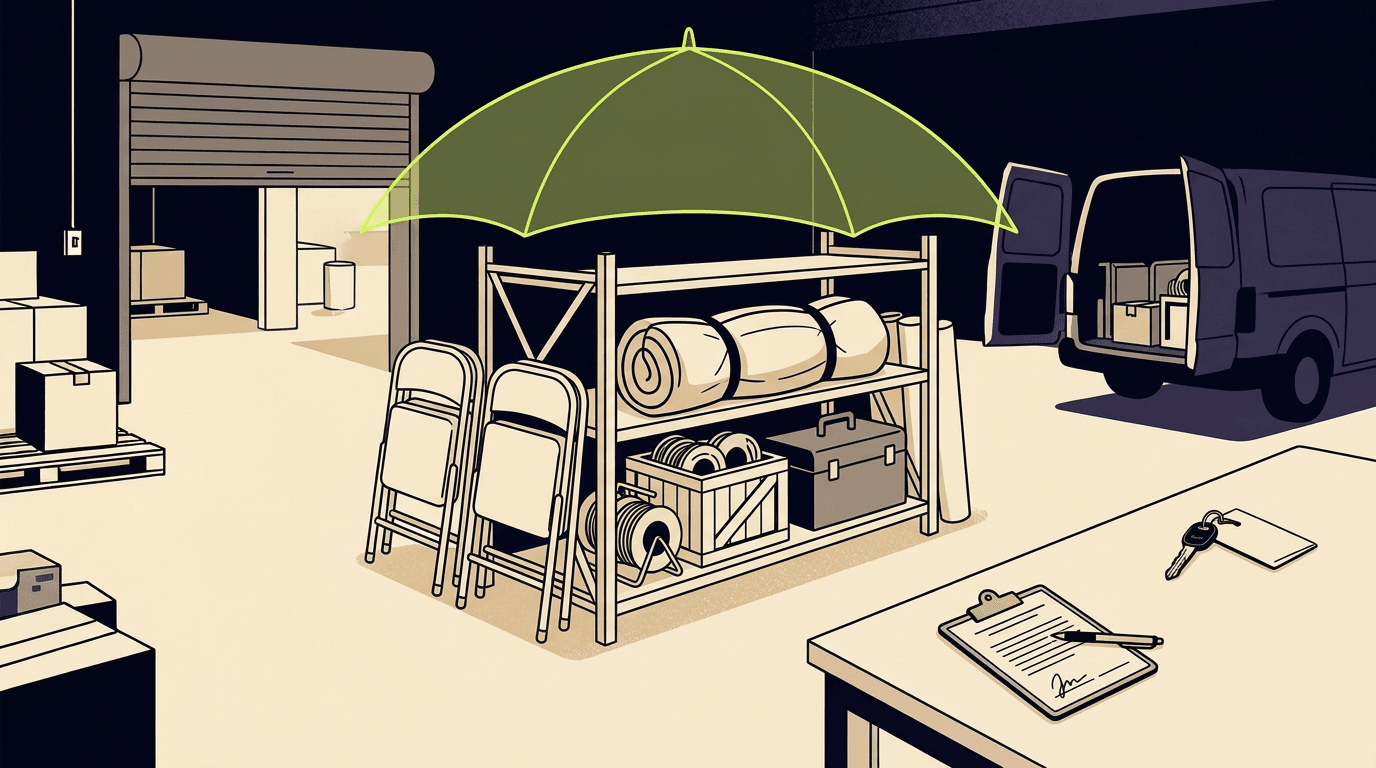
If you rent out physical equipment (party tables, tents, cameras, tools, bikes, costumes, event gear), you need a written agreement. Not a ten-page legal document. Just a clear, short contract that spells out what the customer is taking, when it's due back, what it costs, and who pays if something goes wrong. A good equipment rental agreement template does exactly that.
Most small operators start with a handshake or a WhatsApp thread. That works for your first few bookings. Once you have items going out every week, you'll hit the moment where a customer says "I never agreed to that" and you have nothing written down. That's the moment this article is for.
A note before we start: This is general information, not legal advice. Laws vary by country and region. Have a local solicitor or attorney review your final version before you put it into regular use.
Why a text thread stops being enough
When you're renting five folding tables to a neighbour, a text message works. But once you have ten or twenty bookings a month, things slip. A customer forgets the return date. Someone brings gear back dirty and says it was already like that. A deposit amount gets lost in a scroll of messages from three weeks ago.
A written agreement gives you something to refer back to when a dispute comes up. Customers who sign clear terms are less likely to argue about late fees or damage charges, because the deal was in writing before they took the gear.
What belongs in an equipment rental agreement template
You don't need twenty clauses. For most small hire operations, eight or nine cover everything. Here's each one, with a short explanation and sample wording you can adapt.
The parties: who is renting to whom
Start with the basics. Your business name (or your own name if you're a sole operator) and the customer's full name, phone number, and email. If you deliver to an event venue, include the delivery address too.
This agreement is between [Your Business Name], ("the operator"), and [Customer Full Name], ("the customer"), for the hire of equipment described below.
This seems obvious, but it matters. If you ever need to chase an unpaid balance or a piece of equipment that didn't come back, you need a name and contact details attached to the booking.
The equipment list
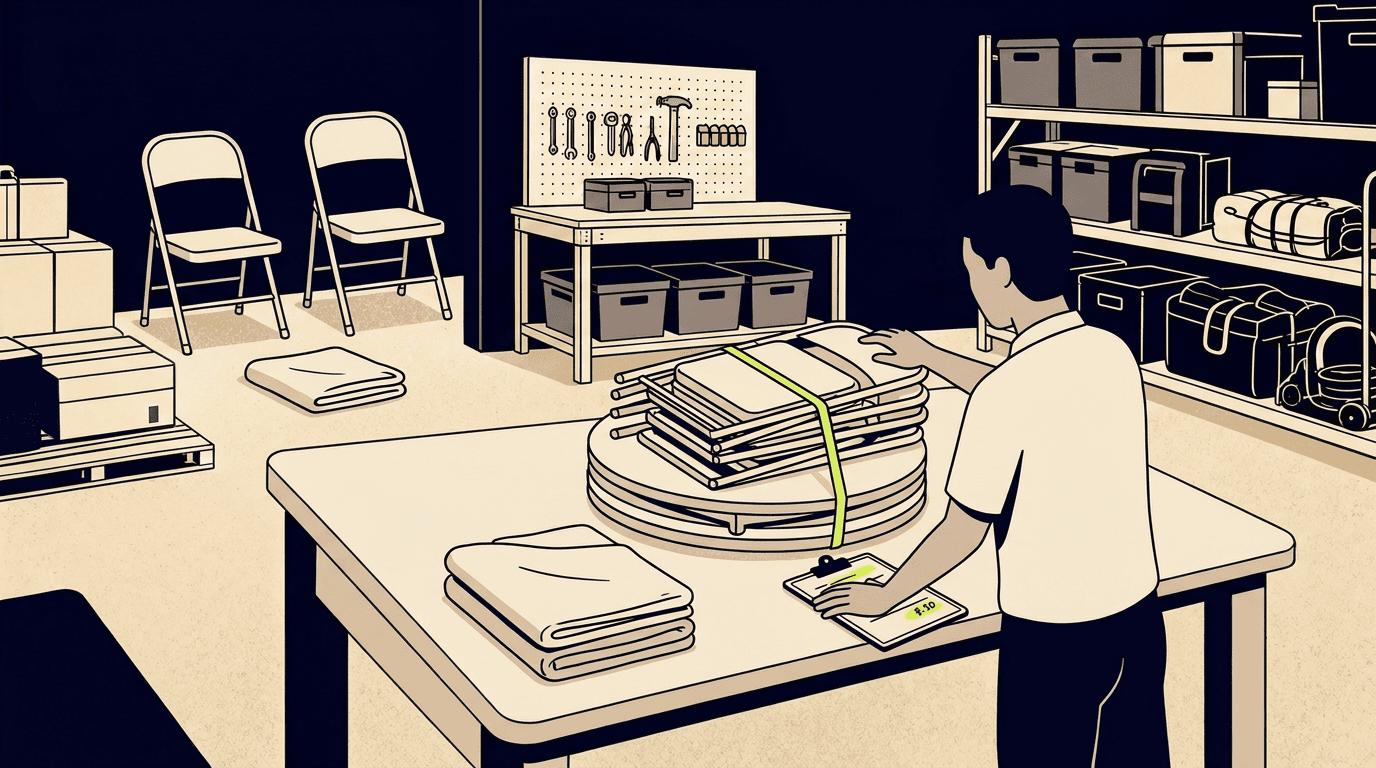
List every item going out, with quantities. Not "party package" or "camera kit," but the actual items: 10 folding chairs, 2 round tables, 1 white tent (3m x 6m). Include serial numbers or asset tags for high-value gear.
Items hired: 10x white folding chairs, 2x round tables (120cm), 1x marquee tent (3m x 6m). See attached packing list for full inventory.
The customer knows exactly what they're getting. You know exactly what should come back.
Condition at pickup
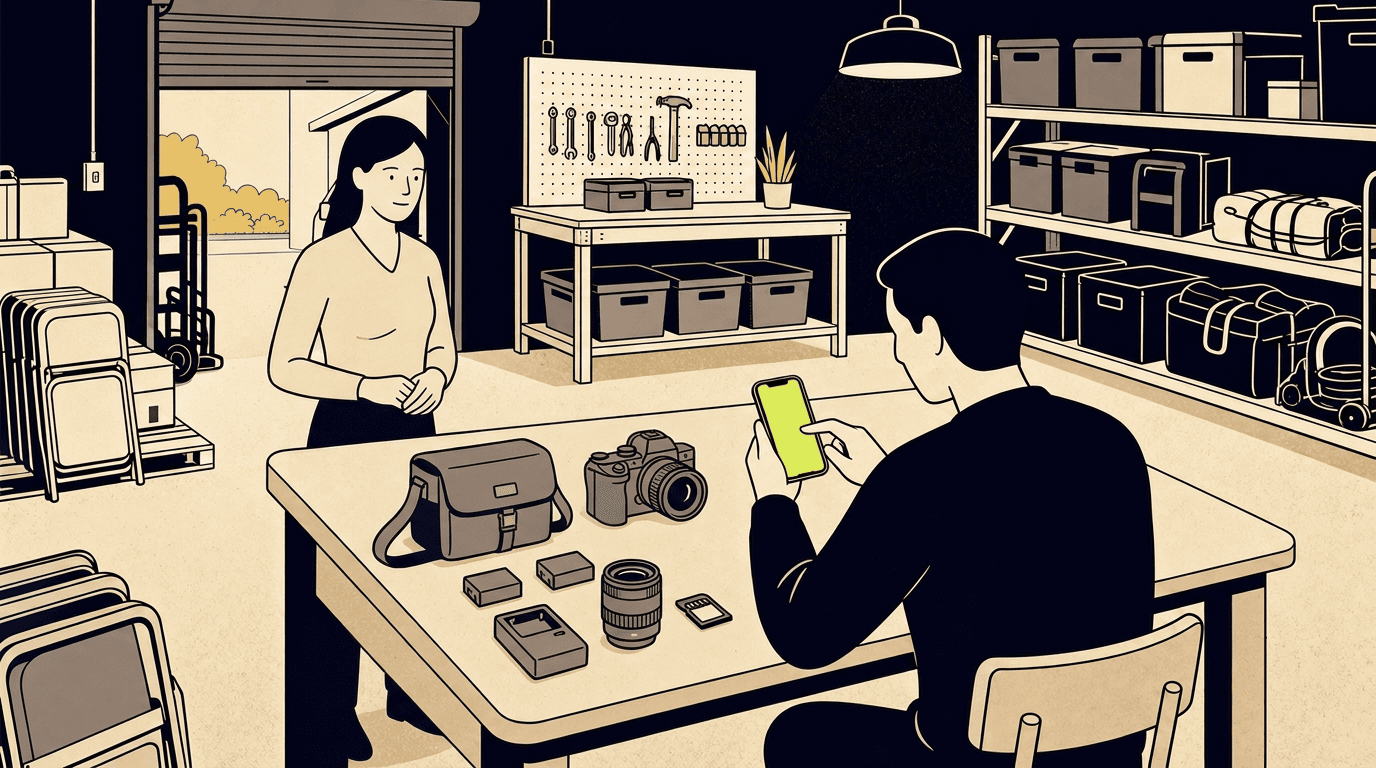
This clause does most of the heavy lifting in any later dispute about damage. Record the condition of the equipment before the customer takes it. For high-value items like cameras or power tools, note any existing scratches or marks. For bulk items like chairs and tables, note the overall condition.
The customer confirms that all items listed above were received in good working condition, clean and free of damage, unless noted here: [space for notes].
If you take photos before handover, say so in the agreement and keep them on file. When a customer returns a tent with a rip and claims it was already there, a timestamped photo from pickup day settles the argument.
Hire period and return date
Spell out the exact dates. Not "the weekend" but "Friday 14 June at 10:00 to Monday 17 June at 10:00." Include the return time, not just the date. Half the scheduling headaches in equipment hire come from a customer assuming "Monday" means end-of-day when you need the gear back by morning.
Hire period: from [start date and time] to [end date and time]. Equipment must be returned by the end time on the return date.
Price, deposit, and payment terms
State the total hire price, the deposit amount, when the deposit is due, and when the balance is due. If you collect the deposit at booking and the remainder at pickup, say that.
Total hire fee: [amount]. Deposit: [amount], due at booking. Remaining balance: [amount], due at pickup. The deposit will be refunded within [X] days of return, provided all items are returned on time and in the condition described above.
Customers want to know exactly what they owe and when. Writing it down also means you don't have to remember the deposit amount for each booking yourself.
Late return fees
Late gear blocks your next booking. A late fee clause gives the customer a reason to return on time, and gives you a clear basis for charging extra if they don't.
If equipment is not returned by [end date and time], a late fee of [amount] per day will apply for each day the items remain unreturned.
Keep the fee reasonable and easy to understand. A flat daily rate works better than complicated formulas. The goal is to get the equipment back, not to penalize anyone.
Damage and loss
Distinguish between normal wear (a scuff on a table leg after a weekend event) and real damage (a broken chair, a torn tent panel, a cracked lens). State who pays for what.
The customer is responsible for any damage beyond normal wear and tear, and for the full replacement cost of any items lost or not returned. Repair or replacement costs will be deducted from the deposit. If costs exceed the deposit, the customer agrees to pay the difference within [X] days of receiving an itemized invoice.
This clause works together with the condition-at-pickup clause. If you documented the condition going out, you can compare it to what comes back and point to the agreement if there's a disagreement.
Cancellation
A simple tiered approach works for most small operators: full refund if they cancel well in advance, no refund closer to the hire date.
Cancellations more than [X] days before the hire start date: full deposit refund. Cancellations within [X] days: deposit is non-refundable.
You held those items and may have turned away other bookings. A cancellation policy protects you from losing both the booking and the revenue.
Signatures
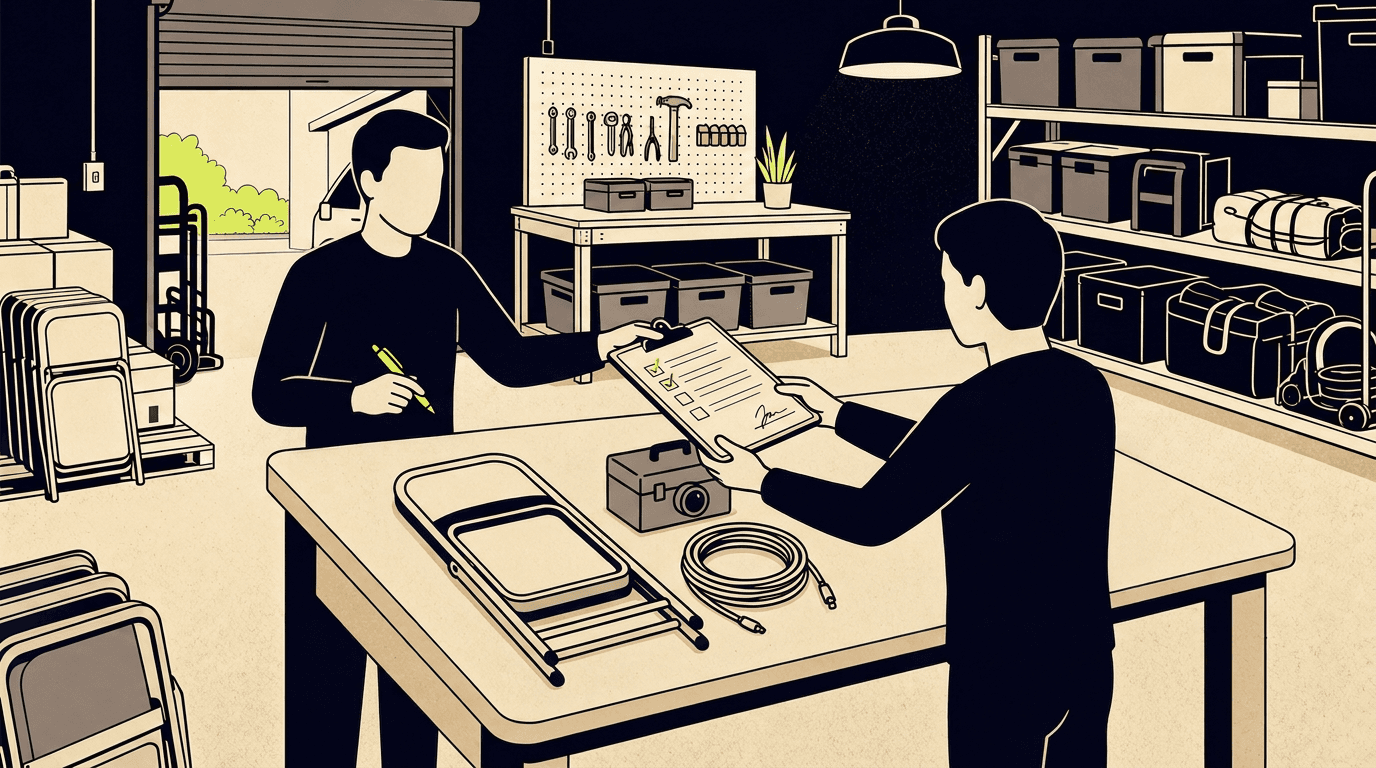
Get a signature. A signature line on a printed form, or a digital signature on a PDF, confirms that the customer read and agreed to the terms. Without one, the agreement is just a piece of paper the customer can claim they never saw.
By signing below, the customer confirms they have read and agreed to the terms of this equipment hire agreement.
Customer name: _______________ Signature: _______________ Date: _______________
Getting the agreement signed in practice
Two approaches work well. Print the agreement and have the customer sign at pickup, or send it ahead of time as a PDF (by email or WhatsApp) and ask the customer to sign before the hire date. Sending ahead is better when you want confirmation before you load a van or block off inventory.
Either way, keep a copy. A signed agreement in a folder takes thirty seconds to file and can save you hours of back-and-forth if something goes sideways on a return.
Start with something simple
You don't need a perfect contract on day one. A one-page agreement covering these clauses already puts you ahead of most small equipment hire operators still relying on a handshake or a chat thread. Write it once, adjust it as you learn what comes up, and have a legal professional check your final version.
If you use Kiryo to manage your bookings, you can generate an equipment rental agreement as a PDF directly from any order, with your own editable terms and a signature block included. But whatever tool you use, the important thing is to have something in writing.