Equipment Rental Business Insurance: What Small Operators Should Know
Your home policy probably doesn't cover the gear you hire out. Here's what to ask a broker before something goes wrong.
This article is not about tenant insurance, landlord cover, or vacation-rental liability. If you rent out physical items for a living, things like tables, chairs, tools, cameras, tents, bikes, or costumes, this is for you. Equipment rental business insurance is one of those topics most small operators know they should look into but keep putting off. There is always something more urgent: a pickup to schedule, a missing tent pole, a customer on the phone asking what is available this Saturday. Insurance does not feel pressing until the morning you open a returned crate and find a projector screen with a tear down the middle, or worse, get a call from a customer saying someone tripped over a cable at their event.
Note: Everything in this article is general information, not insurance or legal advice. Insurance rules, coverage types, and requirements vary by country and region. Before making any decisions, speak with a licensed insurance broker who understands commercial hire operations in your area. We are not insurers, and nothing here should be taken as a recommendation for or against any specific policy.
Why this keeps getting pushed to next month.
Most small operators start their hire business informally. You buy a set of tables for your own event, a friend asks to borrow them, then a friend of a friend offers to pay. Before long you have a garage full of gear and a phone that does not stop ringing on Thursdays and Fridays. At no point in that process does someone sit you down and say, "You need commercial insurance now."
The risk feels abstract when things are going well. Your gear comes back on time, nothing breaks, nobody gets hurt. But equipment hire has a specific problem that other small businesses don't: your inventory leaves your premises regularly and sits in places you cannot see or control. A bounce house is in someone's back garden. Your lighting rig is at a venue you have never visited. Fifty chairs are at an outdoor event and a storm rolls in. You have no control over how any of it is treated once it leaves your hands.
Your home or vehicle policy may not cover this
One of the most common assumptions among small operators is that their existing home contents insurance or van policy will cover their gear if something goes wrong. It is worth checking this carefully, because many home and contents policies exclude items used for commercial purposes. The same goes for vehicle insurance: if you are using your personal van to deliver hire equipment for paying customers, your insurer may not consider that covered use.
This is not a definitive statement about any particular policy. Policies vary enormously. But the pattern is common enough that it is the first thing worth checking. Pull out your current policy documents, read the exclusions section, and look for language about business use, commercial activity, or items held for hire. If the language is unclear, call your provider and ask directly. Do this before you need to make a claim, not after.
Types of equipment rental business insurance to ask about
When you speak to a broker, you do not need to arrive with a shopping list of specific policy names. What helps is knowing the kinds of risk you face, so you can describe your business clearly and let the broker recommend what fits. Here are the main areas worth raising:
Cover for your equipment itself. This is the most obvious one. If your inventory is damaged, destroyed, or stolen while it is sitting in your warehouse or garage, you want to know whether and how it is covered. Some operators carry tens of thousands worth of gear in a single storage space. Fire, flooding, theft: these are real risks, especially if you are working out of a residential property or a unit without a monitored alarm.
Cover while equipment is out on hire. Your gear spends a lot of its life away from you. A camera kit is at a wedding. A set of scaffolding is on a building site. This is a different risk profile than gear sitting on a shelf. Ask specifically about cover for items that are with a customer or in transit between your premises and the delivery location.
Public liability. If someone is injured by a piece of your equipment, or if your equipment causes damage to someone else's property, you could be facing a claim that is far larger than the value of the gear itself. A tent collapses in wind and damages a car. A faulty cable causes a short circuit. A child is hurt on a bounce house. Public liability cover is what protects you in these situations. In some countries and for some types of equipment, this kind of cover may be legally required.
Business interruption. If a fire destroys your stock and you cannot fulfil any orders for weeks or months, you lose more than the gear. You lose the income from every booking you had to cancel. Business interruption cover helps bridge that gap. This is especially relevant for operators who are heavily seasonal: losing your entire stock of event equipment in April, right before wedding season, can be the end of the business.
Goods in transit. Separate from the above, some policies treat transit as its own category. If your van is involved in an accident and the load is destroyed, that may not fall under your vehicle policy or your general equipment cover. It is worth asking how transit is handled specifically.
Questions to bring to a broker
A good broker will ask you most of the right questions. But it helps to come prepared with the details of your operation, because equipment hire is not a business model every broker sees regularly. Here are a few things worth having ready:
- A full list of what you own, with approximate replacement values and serial numbers where you have them.
- Where you store your inventory (home garage, commercial unit, multiple locations).
- How you deliver: personal vehicle, dedicated van, third-party courier, customer self-collection.
- Whether customers set up your equipment themselves or your team handles setup on-site.
- The types of events or jobs your gear is used at (private gardens, public venues, construction sites, all of the above).
- Whether you hire to consumers, businesses, or both.
- Your current turnover and how many active bookings you typically have at once.
Ask the broker what is excluded. Ask what happens if a customer refuses to return something. Ask whether the policy covers hired-out equipment differently from equipment in storage. Ask what documentation you would need to support a claim.
Good records make a claim easier
If you ever do need to make a claim, the difference between a smooth process and a painful one often comes down to your records. Insurers want evidence. They want to know what was damaged, what it was worth, what condition it was in before it went out, and what happened to it.
The habits that help here are the same ones that make running any hire operation easier day to day:
- Condition notes at pickup and return. A brief written note on each order describing the state of the equipment when it left and when it came back. Scratches, dents, stains, anything already present.
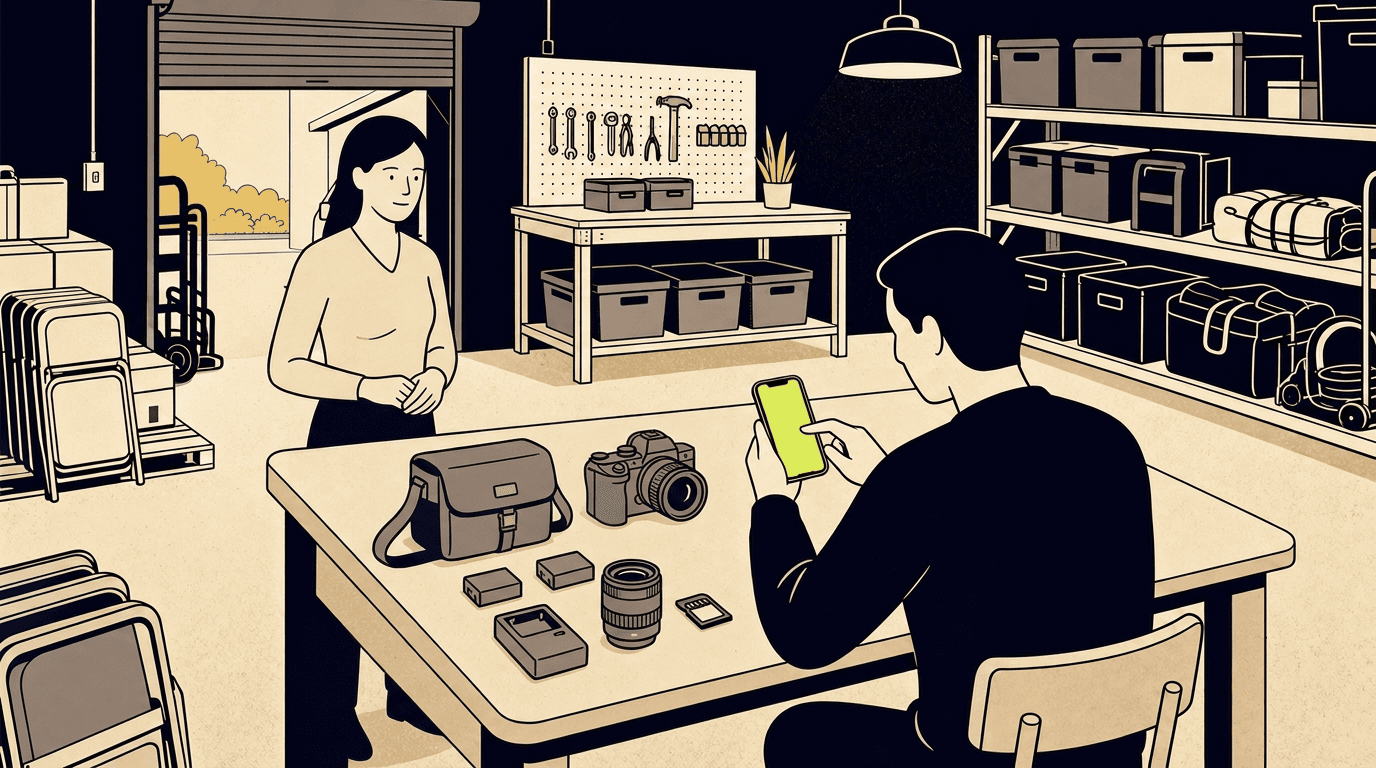
- Photos. A few photos before dispatch and at return. Time-stamped, stored somewhere you can find them again, not buried in your camera roll.
- Serial numbers and asset records. Knowing the exact make, model, and serial number of a stolen or destroyed item speeds up a claim significantly. Keep an up-to-date inventory list.
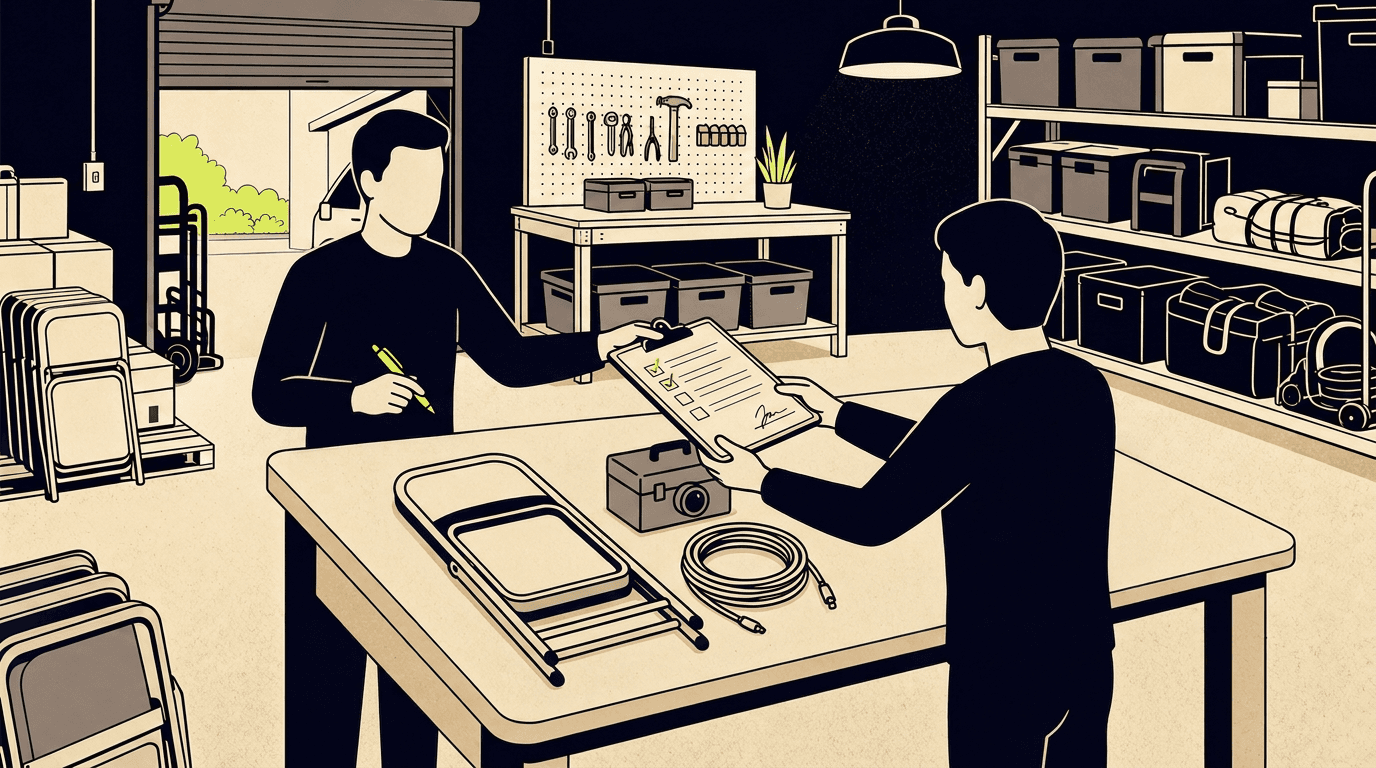
- Signed agreements. A simple document that the customer signs, acknowledging what they received, its condition, and their responsibility for it while it is in their possession. This protects you with the insurer and with the customer.
- Proof of delivery. If your gear was delivered by a driver, a signed delivery note or a photo at the drop-off location. If the customer collected, a signature at pickup.
None of this needs to be complicated. But it does need to be consistent. The operator who can produce a signed agreement, a condition note, a serial number, and a timestamped photo is in a far stronger position than the one who says, "I think it was fine when it left."
Deposits and damage policies are not a substitute for insurance
Collecting a deposit from every customer is a smart first line of defense. A clear damage policy, communicated upfront and signed before anything leaves your premises, helps you recover costs from routine wear and minor breakage. These are good operational practices. Every hire operator should have them.
But a deposit does not cover a liability claim. It does not replace your stock after a warehouse fire. It does not help if a customer is injured by your equipment and pursues legal action. Deposits and damage policies handle the small, everyday stuff. Insurance handles the big, rare events that could shut down your business.
Think of deposits as the first layer and insurance as the one underneath it. You want both.
Reminder: This article is general information only. It is not insurance or legal advice. Coverage, requirements, and terminology vary by country and insurer. Speak with a licensed broker who can assess your specific situation before making any decisions about cover.
Start with a conversation
You do not need to have everything figured out before you talk to a broker. The point of the conversation is to find out what you do not know. Bring your inventory list, describe how your business works, and ask what risks you should be thinking about. A good broker will translate the rest.
If you keep putting this off, set a deadline. Pick a day this month, call a broker who handles commercial or small business insurance, and spend thirty minutes on the phone. That one call is worth more than another year of hoping nothing goes wrong.
Keeping condition notes, photos, signed agreements, and serial numbers organized per order is much easier when everything is in one place. Kiryo is built for exactly that kind of day-to-day equipment hire tracking.