How to Start a Camera Rental Business: A Practical Guide to Hiring Out AV Gear
What's different about renting cameras, lenses, and audio equipment, and how to run it properly from day one.
If you already own cameras, lenses, lighting, or audio equipment that sits idle between jobs, you've probably thought about renting it out. Plenty of photographers and videographers do. But if you want to start a camera rental business that actually runs properly and doesn't end with a missing lens or a scratched sensor, the details matter more than you might expect. Camera and AV gear is a different animal from party supplies or construction tools, and the way you track, protect, and turn around that equipment needs to match.
What makes camera and AV equipment hire different.
Most advice about renting out physical items is built around folding chairs, bounce houses, or power tools. Camera gear brings its own problems.
First, the value. A single cinema lens can cost more than an entire trailer of party tables. A mid-range mirrorless body runs $2,000 to $3,000. That means your deposit and damage policies carry real weight. Second, fragility. A folding chair survives a drunk wedding guest. A lens does not survive a drop onto concrete. Third, complexity. Every camera body ships with a battery, a charger, maybe a second battery, a strap, a body cap. Lenses have front and rear caps. Audio recorders come with windscreens, XLR cables, mounting clips. If any single piece goes missing, the kit isn't complete for the next customer.
Then there's the customer. Someone renting a bounce house probably doesn't know or care what model it is. Someone renting a Sony FX6 knows exactly what they're getting, knows what a scratch on the sensor glass looks like, and will notice if the firmware is outdated or the battery grip feels loose. Your customers are often working professionals or serious hobbyists. They expect the gear to perform.
What to hire out first
You don't need a full inventory to start. Most small camera hire operators begin with gear they already own and use for their own work. The question is which pieces actually earn their keep as hire items.
Camera bodies and popular lenses are the obvious starting point, especially mid-range mirrorless systems that appeal to hobbyists and working shooters who need a backup or second angle. LED panels and portable audio recorders also hire well because people need them for one shoot but don't want to buy outright.
Stabilizers, gimbals, and specialized rigs are worth considering if you already own them, but they can be finicky to maintain and easy to damage. Start with items you can confidently check and clean between bookings. If something takes you 45 minutes to recalibrate after every return, factor that into whether it's worth listing.
A good rule of thumb: if an item earns back its replacement cost within 6 to 9 months of regular bookings, it belongs in your inventory. If it's sitting idle three weeks out of four, it's costing you shelf space and attention for no return.
Building kits and making sure every piece comes back
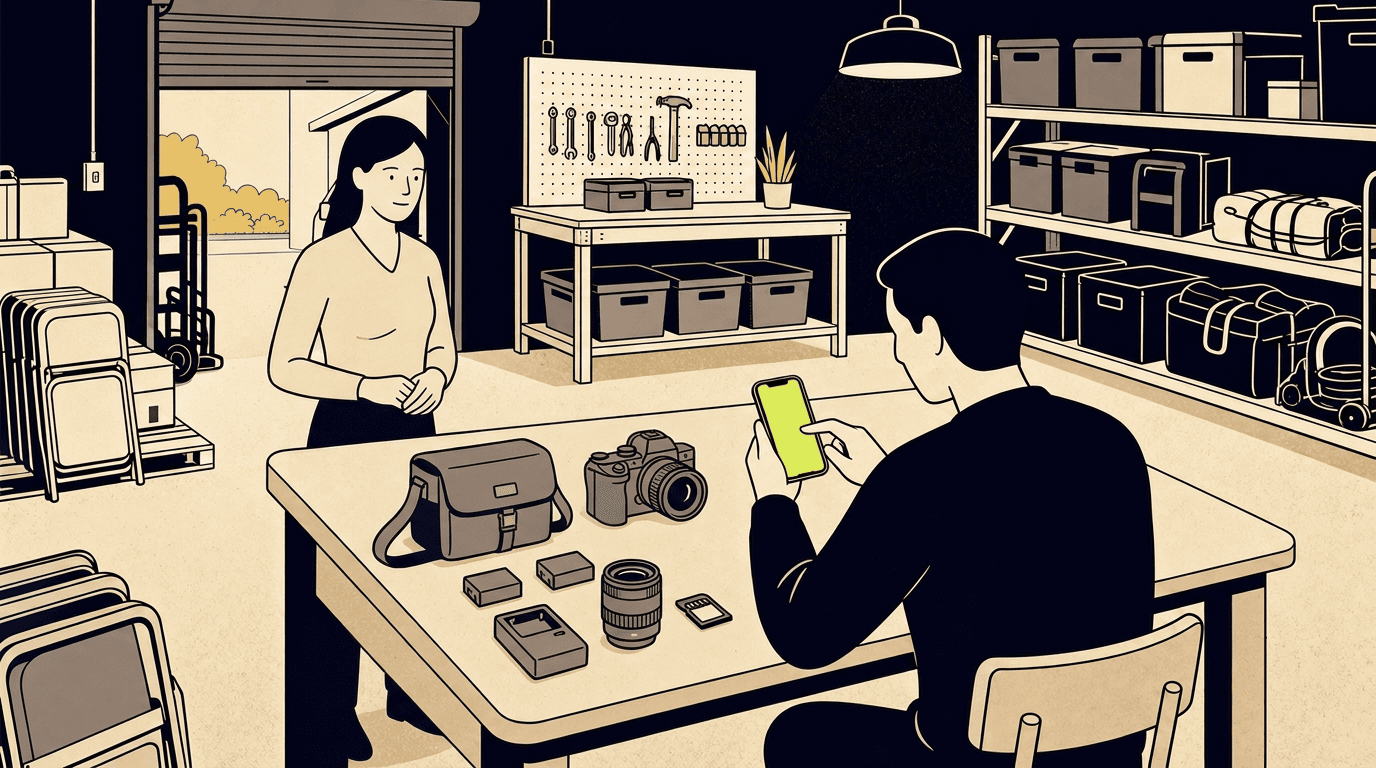
Camera gear almost never goes out as a single item. A body goes out with a lens, two batteries, a charger, a memory card, an HDMI cable, and a camera bag. That's six or seven separate things to track per booking.
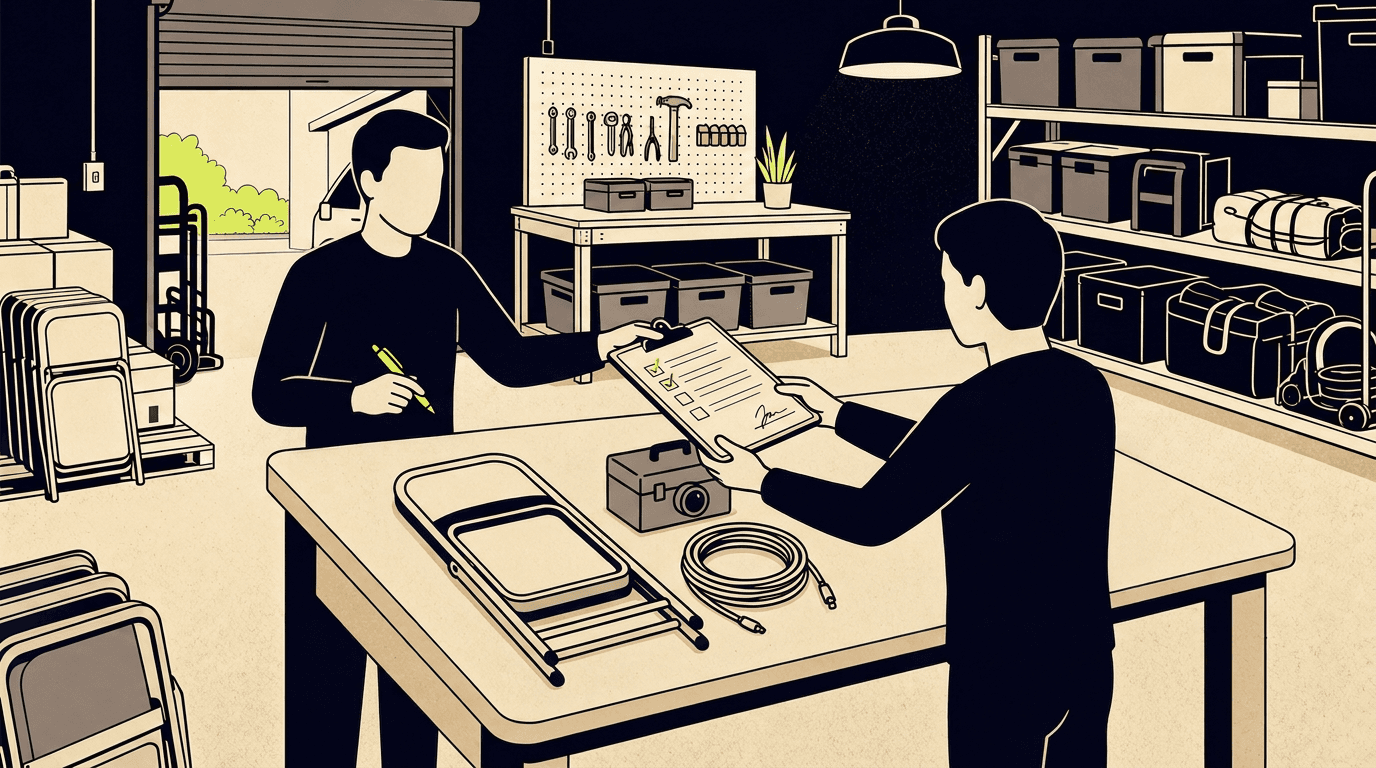
The most reliable approach is to define kits. Each kit is a named group with a fixed checklist of what's included. "Sony A7IV Kit A" might include the body, a 24-70mm lens, two NP-FZ100 batteries, a dual charger, a 128GB SD card, and a shoulder bag. Every time that kit goes out, you check off each item. Every time it comes back, you check again.
Write this list down and go through it at handover. Not after the customer leaves. Not later that evening. Right there, together, with both of you looking at the bag. This is the single biggest habit that prevents the "I definitely returned that charger" conversation two weeks later.
How to start a camera rental business with the right deposit structure
Deposits for camera gear need to be sized to the actual replacement cost of what's going out, not some flat fee you picked once and never updated. If a customer is taking a $2,500 camera body and a $1,800 lens, a $200 deposit means nothing. You'd need $4,000 or more to cover a total loss, and most customers won't put that up in cash.
There are a few ways to handle this. Some operators take a full replacement-value hold on a credit card that is never charged unless something goes wrong. Others require proof of gear insurance, particularly for higher-value bookings or multi-day hires. Some set tiered deposits: a lower amount for customers with a booking history and references, a higher one for first-time hirers.
Whatever you choose, be explicit about it before the booking is confirmed. "The deposit for this kit is $1,500, held on your card and released within 48 hours of return after inspection." No surprises. Clear terms prevent disputes later, and serious customers respect the policy because they know what the gear costs.
Condition checks at handover and return
Before any piece of gear leaves your hands, document its condition. For camera bodies, this means powering on, checking the sensor for dust or scratches (a plain white image on the LCD works as a quick spot check), confirming the shutter count if the body tracks it, and noting any existing cosmetic marks. For lenses, inspect the front and rear elements under a light. For audio equipment, power on and confirm it records.
Take photos. Timestamped photos of the gear laid out with all accessories visible, with the customer present. Some operators snap a photo of the customer holding the packed kit, which confirms who picked it up and what condition everything was in. Two minutes of effort that saves you from every "it was already like that" argument.
At return, repeat the process. Power on, check the sensor, inspect the glass, count accessories against the kit checklist, photograph everything. Only then mark the item as returned and release the deposit hold.
Record serial numbers for every body and lens in your inventory. If something comes back and the serial doesn't match what went out, you have a problem, and you need that record to prove it.
Turnaround between bookings
Camera gear needs more than a wipe-down between customers. A proper turnaround means cleaning the body and lens (air blower, microfiber, lens pen), charging all batteries to full, formatting memory cards after confirming the previous customer has their files, testing shutter and autofocus, checking firmware, and repacking with every accessory on the checklist accounted for.
This takes 20 to 40 minutes per kit, depending on complexity. Don't schedule back-to-back bookings without a buffer. If a kit comes back at noon and goes out again at 1pm, you're sending it without proper inspection, and that's how damage slips through unnoticed until it's too late to figure out who caused it.
Pricing high-value gear
Camera and AV equipment typically commands a higher day rate relative to its value than party supplies, because the items are specialized and time-sensitive. A common starting point is 3 to 5 percent of the item's replacement cost per day. A $2,500 camera body might rent for $100 to $125.
Offer a weekend rate (pickup Friday, return Monday) at roughly the price of two days, and a weekly rate at three to four times the daily rate. These structures encourage longer bookings, which means fewer handovers and less handling wear on the gear. If you want a deeper look at pricing strategy for equipment hire, including how deposits and damage fees fit into the math, that's a topic that deserves its own full treatment.
Keep it tight from the start
Running a camera hire operation well comes down to discipline: checklists at every handover, deposits that actually cover the risk, condition records you can pull up months later if you need them, and enough turnaround time between bookings to catch problems before the next customer does. Get those habits in place early, even if you're starting with three kits out of a spare room, and scaling up later won't mean starting over.
If you're looking for a simple way to keep track of what's out, what's due back, and the condition of each piece of gear without building another spreadsheet, Kiryo is built for exactly that.