When the spreadsheet starts costing you money
The exact moments a rental business outgrows Excel, and what changes when you switch

When the spreadsheet starts costing you money
The exact moments a rental business outgrows Excel, and what changes when you switch
Every rental business starts on a spreadsheet. That isn't a bad thing. When you've got fifteen chairs, one tent, and a couple of bookings a month, a Google Sheet with a few columns (customer name, date out, date back, paid or not) is genuinely the right tool. It's free, it's fast to set up, and you can pull it up on your phone at a wedding venue.
Spreadsheets are fine at first. This article isn't going to tell you otherwise. But somewhere between your tenth booking and your hundredth, the sheet stops helping and starts working against you. Usually it happens gradually, and then all at once, in a specific set of moments. If you recognize any of them, you're probably already past the switch point.
The phone call test
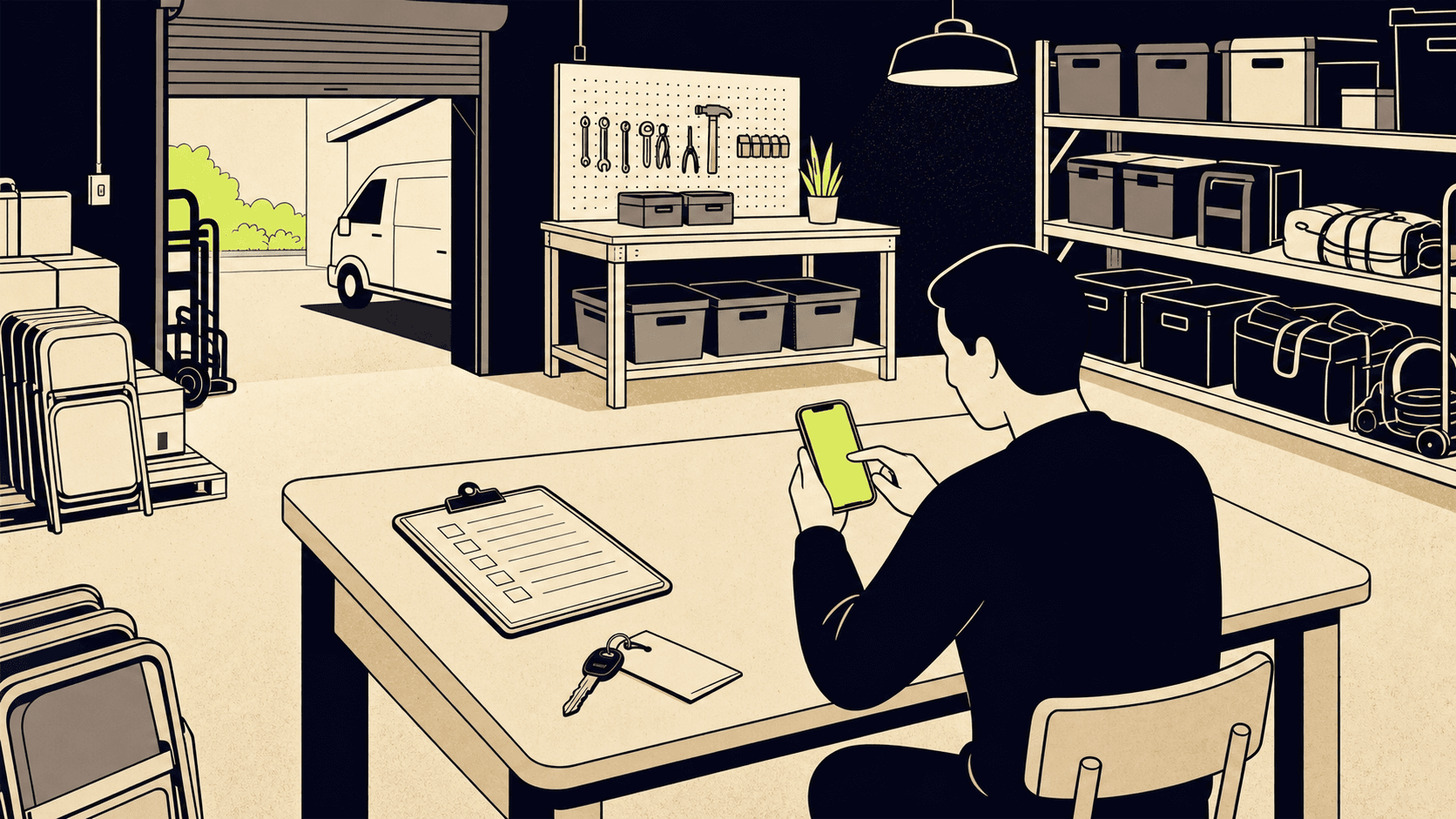
You're on the phone with a customer. They ask if you have six round tables free for next Saturday. You've got three tabs open ("Inventory", "Bookings 2026", "Payments") and you're trying to cross-reference dates while keeping the conversation going.
"Let me check and call you back." You call them back. Sometimes they've already found someone else.
This is the single clearest signal. A rental business runs on availability, and a spreadsheet can't answer the availability question in real time. It can show you what's booked, sure, but working out what's free across overlapping date ranges requires math you do in your head while someone is waiting. That math is where mistakes happen.
Double-bookings that shouldn't have been possible
You booked out your only projector on the 14th. Two weeks later, you took another booking for the 14th. It isn't that you're careless. It's that when you added the second one, you were looking at the calendar section of the sheet, not the projector row. The sheet has all the information. It just doesn't stop you from making the mistake.
The first time this happens, you refund someone and drive across town to borrow gear from another operator. The second time, you start double-checking every booking twice, which slows everything down. The third time, you realize the problem isn't you.
No memory of what came back damaged
A customer returns your speaker on Sunday night. You're tired, you check it plugged in, it seems fine, you tick a box in the sheet. Two weeks later someone rents the same speaker and calls you from the party because one channel is dead.
- Was it damaged on the last rental? The one before?
- You have no record of condition checks, no photos tied to a specific return.
- No notes on which unit is which if you own three of the same thing.
Spreadsheets aren't built to track state that changes over time. They track transactions. Condition history, the story of an item across many rentals, is the kind of information a sheet quietly loses.
Manual math on every quote
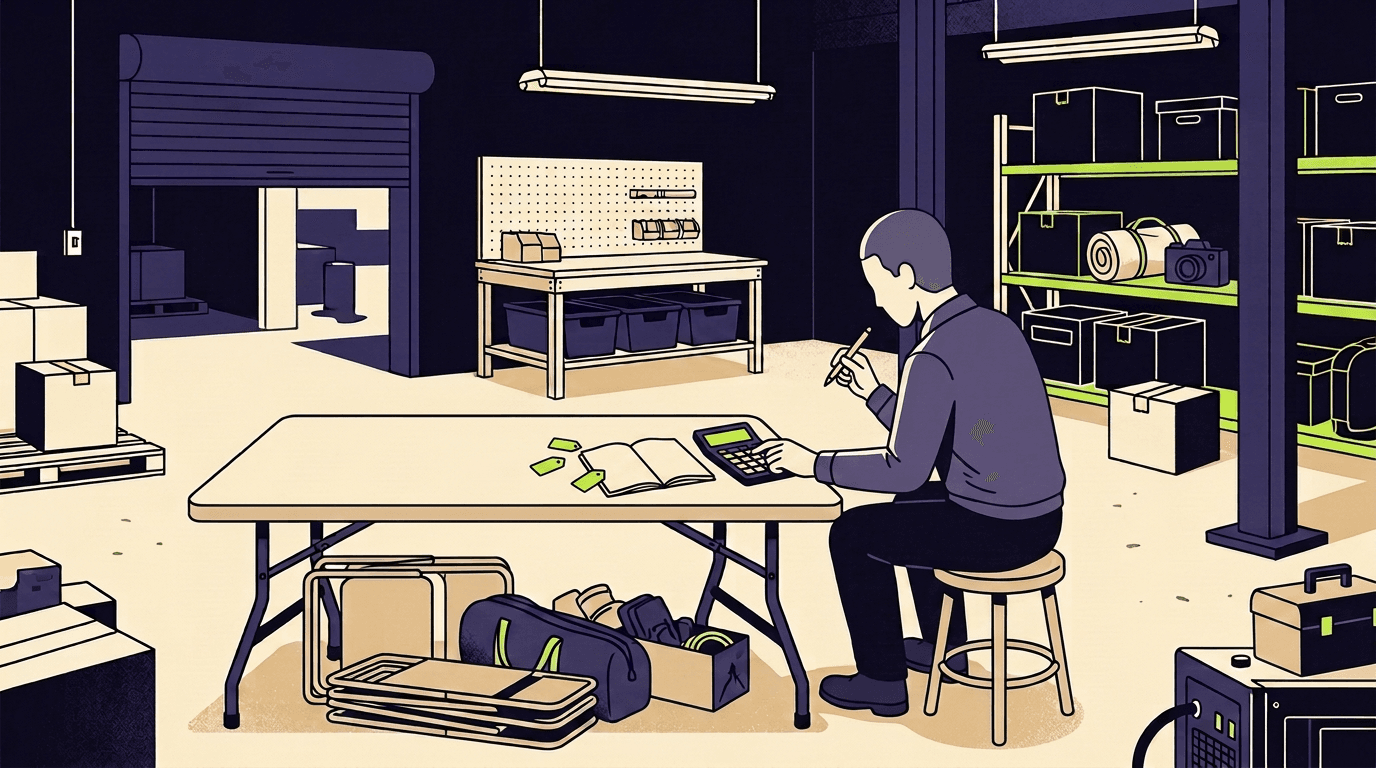
Someone wants a package: two tables, twelve chairs, a linen, and a speaker, from Friday afternoon to Sunday evening. What's that cost? You open the pricing tab. Some items are per day, some are flat per event, the speaker has a different weekend rate. You do the math in the calculator app, write it in a message, hope you got it right.
You did this fine when you had eight items. With forty, and with pricing that varies by weekday, weekend, or duration, every quote becomes a small, error-prone task. The mistakes cost you both ways: undercharge and you eat it, overcharge and you lose the booking.
Deposits and balances that live in your head
Who paid the deposit already? Who still owes the balance on pickup day? In a spreadsheet, this is usually a column called "Paid" that's either "yes", "no", "partial", or empty. Nobody looks at the column at pickup because you're loading the van. So the customer picks up, drives off, and three days later you realize they never paid the balance and now you're chasing it over WhatsApp.
The sheet knew. It just didn't tell you at the right moment. Payment status only helps if it surfaces exactly when you need it: at pickup, at return, on the dashboard you open every morning.
The moment there are two of you
You bring in your partner, or a cousin, or a part-timer for weekends. Now two people need to see and update the same information. Google Sheets can technically do this. In practice:
- One of you edits a cell while the other is looking at it.
- Someone accidentally sorts by the wrong column, formulas break.
- By month three you're back to "just text me before you book anything."
Multi-person operations need a shared source of truth that doesn't fall apart when two people touch it at once. A sheet was never that.
The morning-view problem
Open your spreadsheet tomorrow at 8 AM. What do you need to do today? To answer that, you have to filter, scroll, and mentally reconstruct the day:
- Pickups today.
- Returns today.
- Overdue items.
- Anyone you need to call.
A spreadsheet gives you data. It doesn't give you a day.
The morning question, what needs attention today?, is the most important question a rental operator asks. If the tool you use can't answer it in one glance, you're spending your first thirty minutes every day recreating the answer manually.
What actually changes when you switch
You stop scrolling to answer availability questions. You stop double-booking, because the system won't let you. You stop losing track of who paid what, because the balance sits next to the order and reminds you at pickup. You get a calendar that shows what's out and what's back. You get one screen every morning that tells you what today looks like.
None of this is glamorous. It's just the quiet difference between running a business and being run by one.
If you're at this point, Kiryo is built for exactly this transition: a small, mobile-first ops tool for people renting out five to fifty items who've outgrown the sheet but don't want a piece of enterprise software either. Free to start, no credit card, take a look if it fits.